
Many new golfers struggle with erratic shots on the course. Most focus solely on swing posture and new golf club upgrades, ignoring a critical detail: every stable swing relies on a high-quality golf grip. Worn, slippery grips destroy tactile feedback and balance, ruining even well-practiced swing motions.
Messy, inaccurate shots rarely stem from insufficient power, but from disordered swing sequences. A standard golf swing is a set of connected core positions. One wrong posture will ruin your hit. We’ve sorted 10 practical swing checkpoints for golfers, paired with simple fitting and grip tips to fix unstable shots easily.
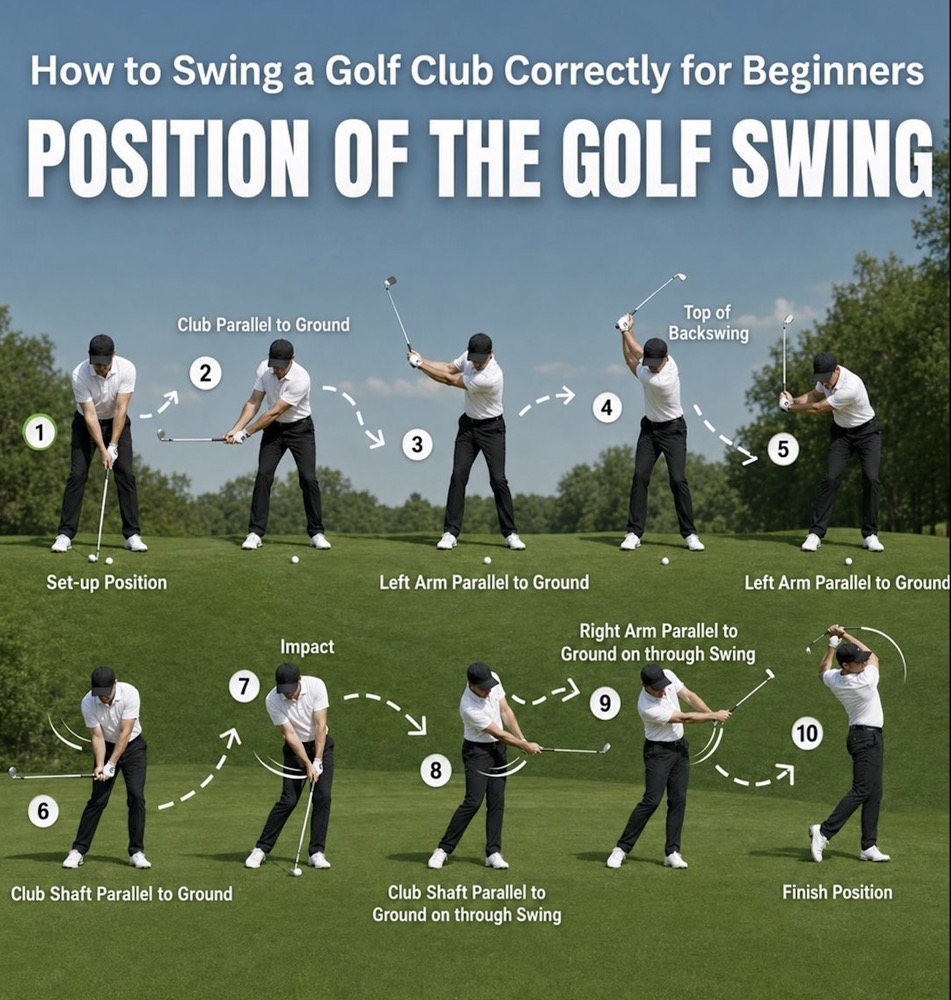
1. Set‑up Position
This foundational stance determines your entire swing trajectory. Keep feet shoulder-width apart, knees soft, and hinge gently at the hips. A flawed setup triggers persistent balance issues, even with precise later swing moves and well-fitted golf club gear.
2. Club Parallel to Ground (Takeaway)
Start your takeaway slow and low to keep the club parallel to the ground. Avoid yanking the club upward, a common mistake causing hooks and slices. A premium anti-slip grip stabilizes your hands, prevents golf club twisting, and delivers smoother swing performance during fitting and daily practice.
3. Left Arm Parallel to Ground
Straighten your lead arm and rotate your shoulders fully. Amateurs often rely only on arm movement, but torso rotation is the key to power and consistency. Let your arms follow your body’s natural rotation.
4. Top of Backswing
At the backswing peak, prioritize balance over maximum length. Avoid over-twisting your body to mimic pro swings. A stable stance always beats forced power for consistent shot quality.
5. Left Arm Parallel to Ground (Downswing start)
Initiate the downswing with your lower body, not your hands. Most beginners rush with their arms, destroying swing consistency. Hip rotation leads the movement, with hands and the club following naturally.
6. Club Shaft Parallel to Ground on Downswing
Keep your head steady and eyes on the ball as the club drops down. Lifting your head early to track the ball is the top beginner mistake, throwing off your entire swing alignment.
7. Impact
Perfect impact comes from coordinated swing movements, not forced strength. Shift full weight to your front foot for solid contact. Stable impact heavily depends on reliable grip feedback. Old, worn grips cause slippage, while high-performance textured grips maintain steady golf club control — a key detail in professional swing fitting.
8. Club Shaft Parallel to Ground (Follow‑through)
Never stop moving the club at impact. A full follow-through maintains swing momentum, boosting distance and consistency. Freezing post-contact is a common habit that weakens shot performance.
9. Right Arm Parallel to Ground on Through Swing
Fully rotate your chest toward the target and extend your trail arm. Stalling your rotation here leads to weak, off-target shots and inconsistent swing rhythm.
10. Finish Position
Finish balanced with full weight on your lead foot and your back foot resting on the toe. If you can’t hold this position steadily, your swing lacks proper balance and stability.
Real‑World Takeaway for Everyday Golfers
Tired of messy, unpredictable shots? These 10 core swing positions are the simplest fix. Golfers don’t need flawless pro techniques, just repeatable, stable motions. Whether for daily practice or professional fitting adjustments, refining one checkpoint at a time brings obvious improvements.
Golf improvement focuses on consistency rather than perfection. Mastering these basic swing positions will greatly reduce bad shots, making your golf club use more stable and every round more enjoyable.
A vital beginner tip: never ignore your grip condition when polishing swings. Worn grips sabotage all your practice efforts. Timely regrip with durable, high-tactile golf grips stabilizes every swing movement, delivers consistent tactile feedback, and maximizes your golf club and fitting adjustment effects.