
Rubber grips have long been the go-to option for budget golf club assemblies, thanks to their low manufacturing costs and basic flexibility. However, as consumer understanding of golf equipment performance grows, the performance gap between traditional rubber and modern PU golf grips has widened significantly. This divide has created a clear two-tier market structure that defines the 2026 golf accessory industry.
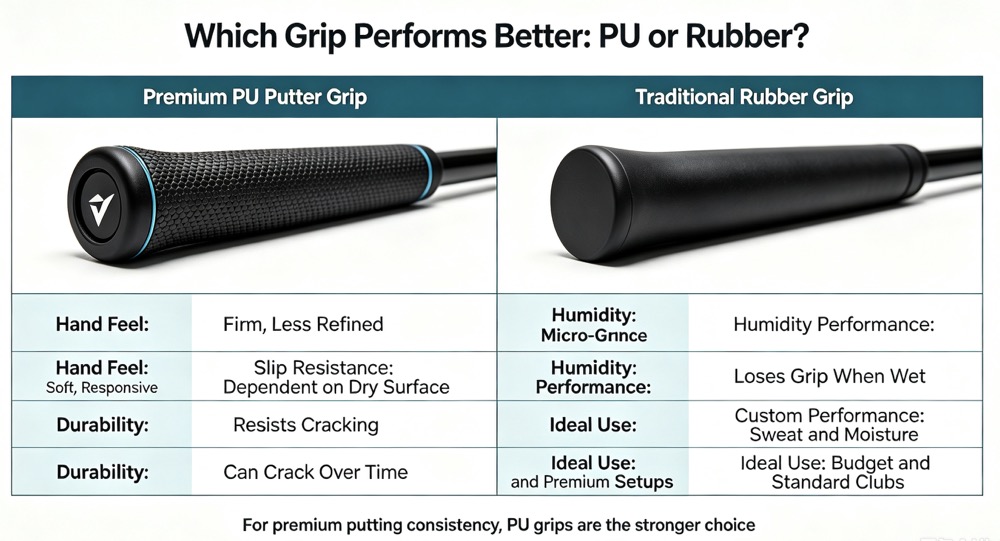
The biggest separation between the two materials lies in molecular stability and environmental durability. Standard rubber compounds degrade rapidly under prolonged UV exposure and constant contact with salty hand sweat. With regular use, rubber grips gradually harden, lose their original textured surface, and develop glossy, slippery patches that completely compromise putting control and consistency.
High-density cross-linked PU material solves these pain points with superior resistance to thermal creep, chemical corrosion, and UV damage. Unlike rubber, premium PU grips retain consistent Shore hardness and uniform compression feedback throughout their entire service life. Golfers experience identical soft tension and tactile responsiveness from their very first round to hundreds of plays later—a level of consistency rubber simply cannot match.
For retail operators and wholesale distributors, this material difference directly impacts customer retention and golf club aftermarket sales. While PU grips carry a slight upfront cost premium, their stable performance and extended lifespan cut down on frequent club replacements, after-sales disputes, and negative user reviews. This is why professional fitting studios and premium golf brands are steadily transitioning their core inventory from rubber to high-quality PU grip lines.