
Golfers frequently struggle with erratic putting in humid mornings, dewy fairways, or sudden rainy weather. Most attribute slipping grips and unsteady strokes to sweaty palms or flawed swing mechanics, but surface texture design is often the root cause. Grip textures are not universal—many standard options lack structural engineering for high-moisture environments, which negatively impacts daily golf club performance. This makes texture selection a critical, yet overlooked, factor for reliable on-course performance.
Manufacturers categorize functional grip textures into three core types for real-world course conditions. Fine micro-grain textures deliver soft, precise feedback, ideal for dry weather and technical tour putting. Linear cross embossed textures feature open groove architectures that actively channel away surface moisture, offering superior stability in humid, damp environments where standard grips falter.
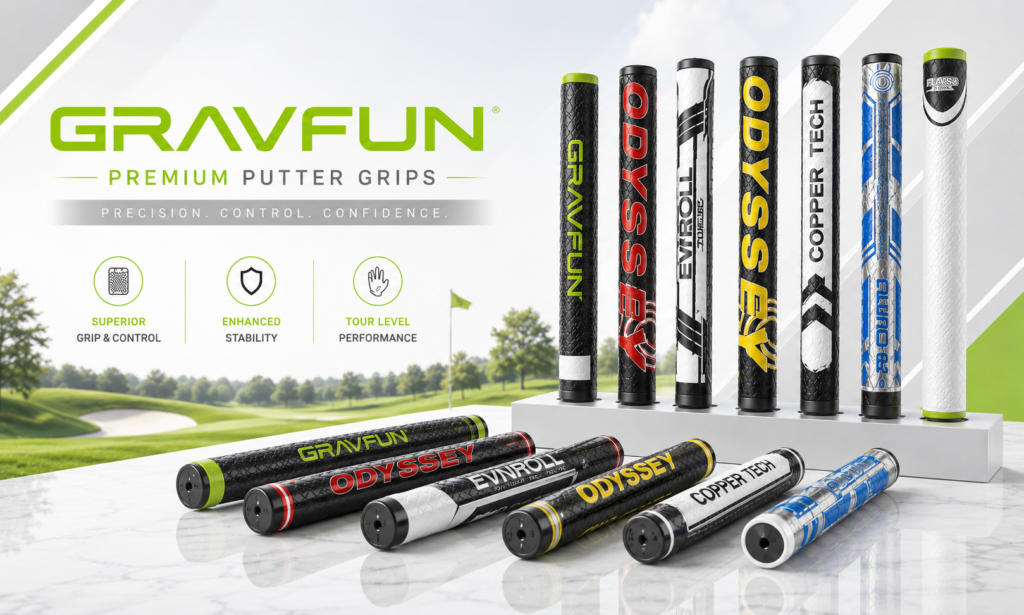
Independent field testing confirms that customized textured premium PU putter grips maintain 35% more friction stability at 80%+ humidity compared to basic uniform rubber grip designs. Equipped with integrated alignment spine lines and optional diversified surface textures including micro-grains, pebbled matte ridges and anti-slip cross grooves, these PU grips deliver consistent sweat and water repellency across the entire grip surface without segmented zoning. For pro shops and distributors serving coastal, tropical, and high-rainfall regions, stocking these weather-optimized PU grips drastically reduces customer complaints, product returns, and seasonal performance-related issues caused by slippery grip surfaces in humid climates.