
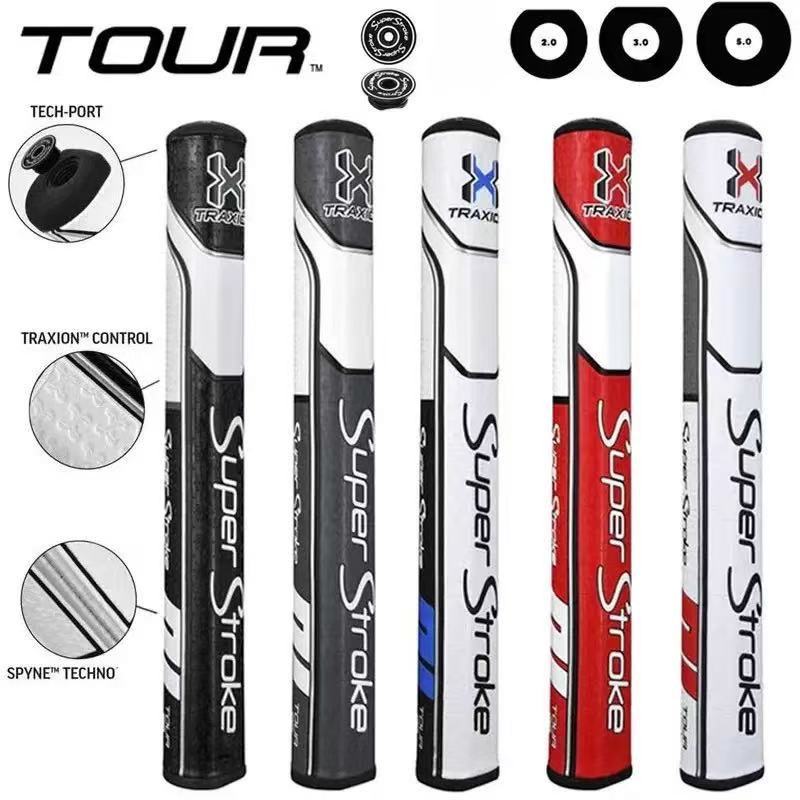
For most golfers, putting performance gets attributed almost entirely to putter head geometry, loft and lie settings. Yet equipment fitters consistently point out that grip shape and material can rewrite how your hands behave through impact. Many mid‑handicap players struggle with inconsistent roll not from poor green‑reading, but excess hand tension triggered by tapered grip geometry. The Zenergy Tour 2.0 has become one of the most‑observed tour‑used models over recent seasons, so it is worth unpacking what its design choices tell us about modern premium putter grip development.
Released as part of the updated Zenergy lineup, the Tour 2.0 sits in the mid‑oversize Tour profile category, built around parallel no‑taper construction rather than conventional downward tapering. Traditional putter grips narrow toward the butt end, which naturally pushes golfers to squeeze harder with the lower hand during stroke execution. By maintaining consistent outer diameter along the full working length, this layout aims to relax hand pressure and minimise unwanted wrist rotation, which is especially helpful for golfers prone to flipping or twisting the putter face at impact.
One of its most discussed hardware features is the enhanced SPYNE embossed ridge running along the grip’s inner underside. Unlike printed alignment marks that only work with visual check, this raised tactile feature delivers physical feedback for hand placement. Golfers can feel the ridge under their palm as they set up, helping replicate identical hand positioning on every putt. It is not a magic fix for flawed mechanics, but it delivers repeatable reference points for setup consistency.
Its soft PU outer layer utilises multi‑area textured patterning across the grip surface. Designers apply different texture densities across high‑contact zones to strike balance: enough tackiness for humid or sweaty‑palm conditions, without sacrificing the subtle tactile feel required to judge distance on lag putts. At the top end, the built‑in Tech‑Port opening allows aftermarket installation of counter‑balance weights, letting players tune overall club balance, though end users should note that counter‑balance inserts are sold separately and not pre‑installed on the grip itself.
That said, the Zenergy Tour 2.0 is far from a universal fit for every golfer. Players who prefer firm, cord‑style rough tactile feedback will find this soft PU compound too muted for their taste. For distributors and pro shop operators, another practical detail to note: like most soft PU constructions, prolonged UV exposure from outdoor storage accelerates surface ageing, so stock storage conditions directly affect product service life for end customers. It targets golfers seeking calmer hand action, rather than players looking for sharp, crisp impact feedback.
Key Takeaways for Selecting Parallel‑Profile Putter Grips
When evaluating comparable premium putter grips (for retail stocking or personal fitting), several practical criteria are worth keeping in mind:
- Profile priority: Confirm whether you actually benefit from no‑taper parallel shape. Golfers with arcing putting strokes sometimes still prefer mild tapering for natural hand closure. Straight‑back‑straight‑through stroke styles tend to gain the most from parallel‑profile grips.
- Tactile expectation: Distinguish between “traction” and “feedback”. Soft PU delivers solid slip resistance, while cord‑infused compounds offer sharper impact feel.
- Modular balance potential: Check if the grip supports counter‑weight modification. Not all aftermarket putter grip models reserve space for additional weight inserts.
- Material service environment: PU formulations respond differently to high‑humidity coastal climates versus dry inland regions; shelf life varies under different storage conditions.
Frequently Asked Questions
Does a no‑taper grip automatically improve my putting?
No‑taper geometry reduces lower‑hand squeezing tendency, yet it cannot correct fundamental stroke flaws. It works best paired with solid putting fundamentals.
Will SPYNE‑style raised ridges interfere with my existing hand posture?
For golfers with deeply ingrained unusual hand placement, a prominent under‑grip ridge can feel awkward at first; short trial periods are recommended before permanent installation.
Final Thought
The Zenergy Tour 2.0’s market success stems from solving a very specific pain point: uncontrolled hand tension during putting, rather than trying to satisfy every possible player preference. For distributors, it serves as a strong case study: modern premium putter grip purchasing decisions are increasingly driven by ergonomic setup aids and material performance in variable weather, not merely colourways and brand recognition. When sourcing comparable aftermarket PU putter grips, evaluating these functional ergonomic details will help match products to real‑world golfer demands.